Three Signals Worth Noticing
Understanding what your body and environment are telling you is the foundation of sustainable food habits. These three signals work together to shape how you eat.
Hunger and Fullness Cues
Your body has its own language. Learning to recognise genuine hunger, satisfaction, and fullness takes time and gentle attention. It's not about strict rules—it's about listening.
Environment Cues
What's around you matters. The kitchen layout, available foods, social settings, and daily routines all influence your choices. Awareness of these patterns helps you make intentional adjustments.
Time Pressure Cues
Rushed mornings, packed schedules, and stress affect how you eat. Notice when time pressure changes your choices. Slowing down—even slightly—opens space for better decisions.
Practice: Everyday UK Scenes
Real life looks like this. These are moments where the three signals meet your day.

Packing a Lunch at Your Kitchen Counter
You're starting the day with intention. Packing lunch yourself gives you control and presence. Notice what goes in: how much protein, vegetables, something for satisfaction. This is the moment choice begins.

Writing a Grocery List
Planning ahead is powerful. When you sit down with pen and paper to plan meals, you're making dozens of small choices at once. Notice how this feels—do you feel clearer? More grounded? This is observation at work.

The Supermarket Aisle Decision
You're standing in front of choices. This is where environment signals become clear. What are you reaching for? Does it match your plan, or are you responding to something else? There's no judgment—just information.
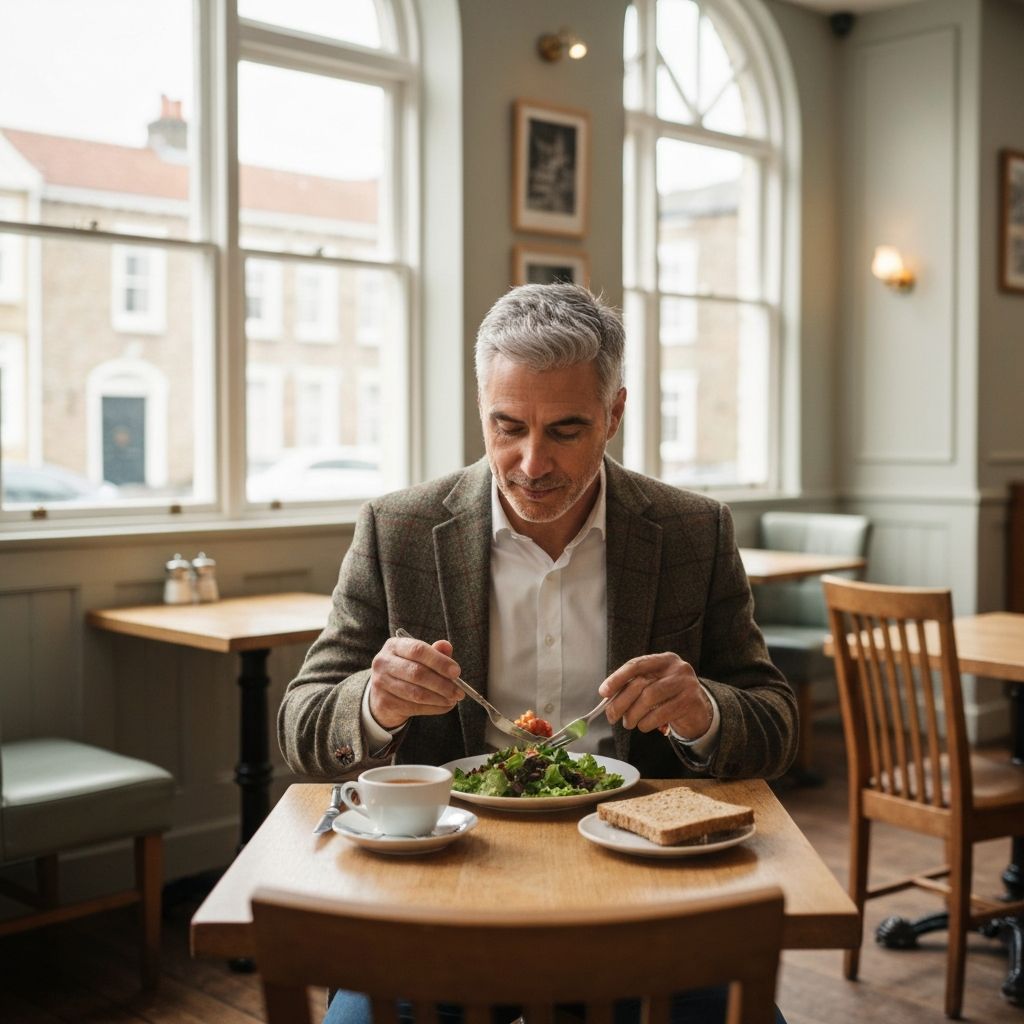
A Calm Café Lunch
You've slowed down enough to sit. Notice the difference between eating here and eating at your desk. Without rush, you can sense your hunger and fullness more clearly. This is where real learning happens.

A Walk After Work
Movement isn't punishment. A walk helps reset your stress and settle your appetite. This small change can shift how you approach evening eating. Notice how your body feels after 15 minutes of gentle movement.
Packed Lunches That Don't Feel Like 'Meal Prep'
The phrase "meal prep" can feel clinical and rigid. What we're talking about is simpler: making lunch the night before, or during a calm moment in the morning.
A Flexible Framework
Think of lunch in three parts: a base (grains, pulses, or other carbohydrates), protein (fish, chicken, beans, tofu), and something for texture and satisfaction (vegetables, nuts, dressing). This isn't a rule—it's a starting point. You adjust as you learn what keeps you satisfied through the afternoon.
Keep It Interesting
The same lunch twice a week is fine. Completely different lunches every day can create decision fatigue. Find the middle ground. Maybe Monday to Wednesday is one theme, Thursday to Friday is another. This rhythm reduces stress.
What Actually Works for You
Some people cook a bigger dinner and take leftovers. Others prep components and assemble each morning. Neither is superior. The best lunch system is the one you'll actually follow. Notice what feels sustainable for your life right now.
Small Resets That Don't Require Starting Over
If you've eaten something you didn't plan to, or you've had a week of choices that didn't feel aligned—you don't need to punish yourself or "start fresh Monday." Small resets are built into every day.
The Next Meal, Not Tomorrow
Your next meal is your next opportunity. It doesn't matter if lunch didn't go as planned. Dinner can be different. You don't have to wait for Monday or a new week. This approach teaches your nervous system that one choice doesn't define everything.
Notice Without Judgment
When something wasn't as intended, ask: What happened? Was I rushed? Stressed? Hungry? This is data. You're not being "bad"—you're gathering information. Over time, these observations guide better choices naturally.
One Small Change at a Time
If you notice you're often too hungry by afternoon, maybe you need more protein at lunch. If evenings feel chaotic, maybe prep takes 10 minutes earlier. Each adjustment is tested by real life, not perfection. This is how lasting change actually happens.
The Shared Map
Nutrition work is a partnership. Here's how we move through it together.
Clarify
We begin by understanding your current habits, triggers, and goals. No judgment—just clarity.
Observe
You practice noticing patterns: hunger signals, environment cues, time pressures. I support this process.
Adjust
Small, testable changes emerge from observation. One at a time. We see what actually works.
Support
You're not alone in this. Regular check-ins, honest conversation, and practical problem-solving happen here.
Review
We step back periodically. What's working? What's become automatic? What needs rethinking? You lead.
This cycle repeats. It's not linear. It's alive.
About Bornwellah
Bornwellah is a nutrition-focused advisory project built on partnership. We work with people through dialogue, adaptation, and steady support—never through pressure, punishment, or promises.
We don't use medical language. We're not diagnosing, treating, or curing anything. We're here to help you understand your own patterns, build habits that feel sustainable, and make peace with eating in a way that serves your life.
Every person's situation is different. We respect that. The framework here—observing signals, making small adjustments, staying steady—works across different bodies, different lives, different constraints.
Our responsibility is to listen, guide thoughtfully, and be honest about what we can and can't do. Your responsibility is to show up honestly and be willing to experiment. Together, we build something real.
Questions to Reflect On
These aren't questions we ask you to answer "correctly." They're invitations to notice.
- What does satisfied—not stuffed, just satisfied—actually feel like in your body right now?
- When do you usually eat without noticing? What's happening in those moments?
- What one small change would make your day feel less rushed around food?
- Who or what environment makes eating easier and more peaceful for you?
- If food choices were judgment-free, what would you actually want to eat?
Get in Touch
We'd like to hear from you. Have questions? Want to know more about how we work? Send us a note.
Contact Information
Bornwellah
22 Corporation Street
Birmingham B2 4LP
United Kingdom
Phone: +44 121 684 9375
Email: [email protected]